
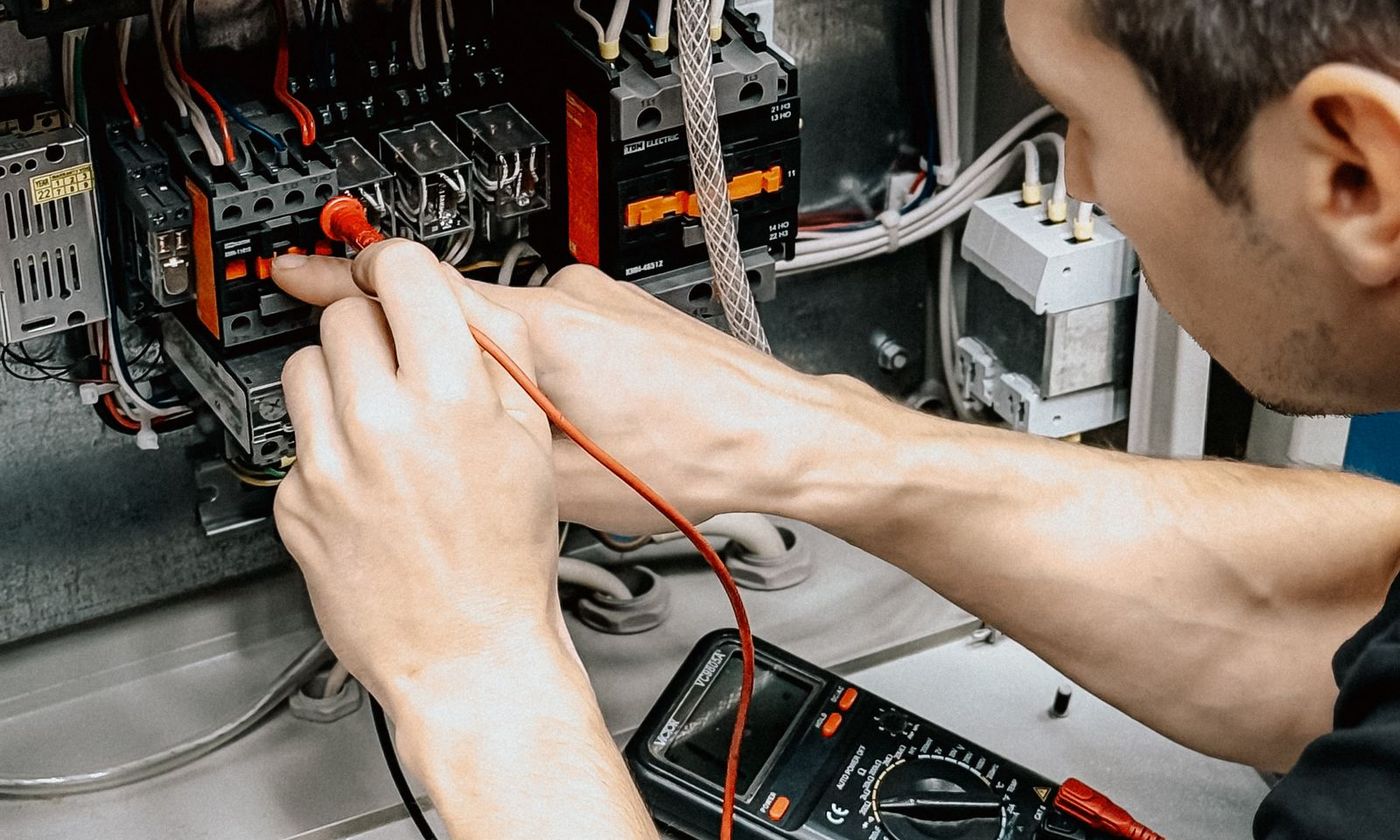
What the thermostat actually does
On an electric tank, thermostats are surface-mounted against the tank wall behind the access panels, sensing steel temperature rather than water temperature directly. The upper one also carries the high-limit safety cut-out. On a gas tank, the thermostat is integrated into the gas control valve with a sensing probe extending into the tank.
Different construction, same two failure modes: contacts that stick closed, and calibration that drifts.
Stuck closed: scalding water
When contacts weld shut, the element or burner never switches off. Tank temperature climbs until the high-limit trips — but before it does, the water at the tap can reach a scalding temperature. Water above roughly 140°F can scald in seconds, and considerably faster for children and older adults.
If your water has suddenly become scalding
Switch the heater off at the breaker, or turn the gas control to off, and stop using hot water until it is checked. A thermostat stuck closed does not fix itself, and the high-limit is the last line of defence rather than a control.
Drifted calibration: lukewarm water
The opposite failure is quieter. The thermostat satisfies early, the heater stops short of the set temperature, and you get water that is usable but never properly hot. Because it happens gradually, most people adjust their habits before they call. Comparing the dial setting against actual delivered temperature at a tap identifies it quickly.
The high-limit switch
The red reset button on the upper thermostat is an emergency cut-out, typically tripping around 180°F. It is worth being precise about what a trip means: the water genuinely got that hot. Something allowed it to — a stuck thermostat, an element shorted and energised continuously, or a grounded element. Resetting the button without finding that cause simply schedules the next trip.
If your reset button keeps popping, the diagnosis sits alongside electric water heater repair and heating element faults, because those are the components that cause it.
Testing rather than swapping
Thermostats are cheap, which tempts people into replacing them speculatively. The problem is that a failed element and a failed thermostat produce overlapping symptoms, and fitting a new thermostat to a tank with a burned-out element changes nothing. Both are tested with power isolated: thermostats for contact function and calibration against actual tank temperature, elements for resistance and for a short to the tank body.
Setting temperature sensibly
Around 120°F is the common recommendation — hot enough for normal household use, low enough to limit scald risk, and gentle on scale formation. Running significantly hotter accelerates mineral build-up and shortens element life, which in Wilmington's supply water is a real cost rather than a theoretical one. Households with someone elderly or very young at home have a stronger reason to stay at the lower end.
Homes across Wawaset Park, Trolley Square and Bellefonte with original heaters often show thermostats that have drifted several degrees from their marked setting after years of cycling.
Related repairs
- Electric water heater repairElement, thermostat, high-limit and wiring faults on 240V tanks.
- Heating element repairBurned-out and scaled elements, correct wattage matching, grounded element faults.
- Water heater not heatingLukewarm water, short supply and slow recovery on any fuel type.
- No hot water repairComplete loss of hot water on gas, electric and tankless systems.
Questions we get asked
Why is my water suddenly scalding hot?
Most often a thermostat with welded contacts that no longer switches the heat off. Turn the heater off at the breaker or gas control and have it checked before using hot water — this is a burn risk, not an inconvenience.
What temperature should my water heater be set to?
Around 120°F suits most households. It limits scald risk and slows scale formation while still meeting normal hot water demand.
Can I just replace the thermostat myself?
The part is inexpensive, but the terminals behind the access panel carry 240 volts and remain live until the breaker is off and verified. The bigger issue is that a failed element produces the same symptoms, so replacing the thermostat alone often changes nothing.
Why does my upper thermostat keep tripping the reset?
Because water genuinely reached the limit temperature. A thermostat stuck closed or an element shorted to the tank keeps heat on continuously — the reset button is reporting a fault, not causing one.
Get it looked at
Describe what the heater is doing when you call — the symptom usually narrows the fault before anyone arrives.
(302) 603-9708 Call now for service