
The two-element system
Most residential electric tanks in Wilmington are 240-volt units with an upper and a lower element. They are non-simultaneous: the upper thermostat satisfies the top of the tank first, then hands control to the lower element. That design explains almost every symptom pattern you will see.
Lose the lower element and the top third of the tank still heats, so you get a short burst of hot water and then cold. Lose the upper element and the tank often produces nothing usable at all, because the lower element never receives the handoff.
Reading the symptom
- Hot water runs out quickly — usually a failed lower element or lower thermostat
- Water is warm but never hot — commonly a failed upper element, or a crossover at a mixing valve
- No hot water and the reset button has tripped — the high-limit switch cut power after sensing an overheat
- The breaker trips when the heater calls for heat — a shorted element or damaged wiring
- Water is scalding hot — a thermostat stuck closed, which is a burn risk and should not be left running
Diagnosis
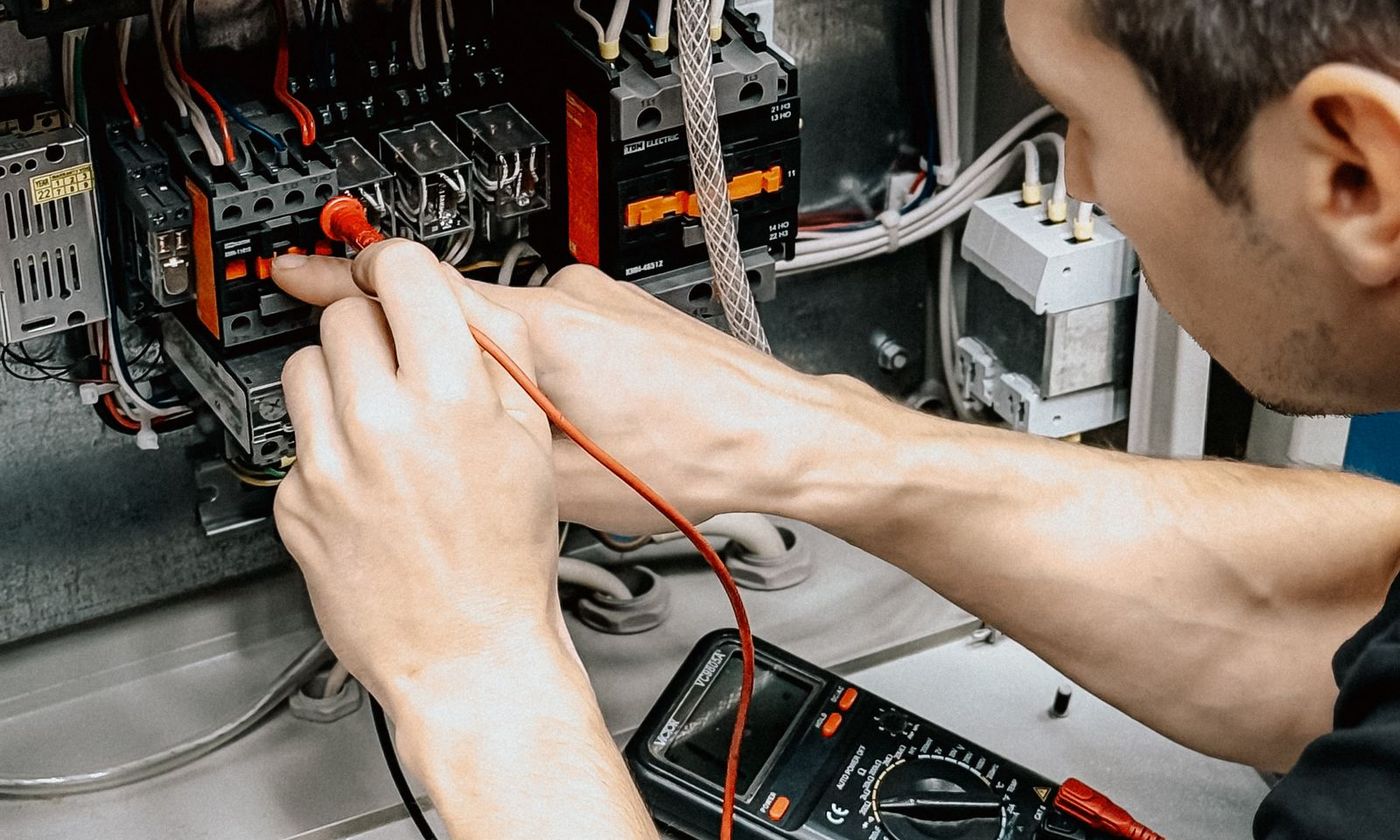
Elements are tested for continuity and resistance with power isolated at the breaker, and for a short to the tank body. A reading well outside the expected range for the element's wattage confirms a burn-out. Thermostats are checked for calibration and for contacts that have welded closed.
A tripped high-limit is treated as a symptom rather than the fault. Something caused the water to exceed the limit — a stuck thermostat, an element that stayed energised, or a grounded element — and simply pressing reset returns the fault within days.
Sediment and element life
Elements fail early when they sit buried in sediment. Scale bakes onto the sheath, the element cannot transfer heat into the water, and it overheats itself into failure. In areas with harder supply water this is the single most common reason a lower element burns out repeatedly. Where that pattern shows up, the fix includes flushing the tank and checking the drain valve, not just fitting a new element.
Electrical safety
These are 240-volt circuits. The access panels sit directly over live terminals, and a heater can hold dangerous voltage even when the thermostat is satisfied. Power is isolated and verified dead at the terminals before any panel comes off.
If a breaker trips repeatedly, the problem may be upstream of the heater — an undersized circuit, aluminium branch wiring, or a corroded connection in the disconnect. That gets identified rather than masked by a larger breaker.
Electric tanks in Wilmington
Electric units are common in Wilmington's converted rowhomes and in apartment and condo conversions where a gas flue was never available, including around Trolley Square and Riverside. In those installations access is usually the constraint — a heater wedged in a closet with the panels facing a wall. That affects how a repair is carried out and sometimes whether a same-size replacement will physically fit.
Related repairs
- Heating element repairBurned-out and scaled elements, correct wattage matching, grounded element faults.
- Water heater thermostat repairMiscalibrated controls, stuck contacts and tripped high-limit switches.
- No hot water repairComplete loss of hot water on gas, electric and tankless systems.
- Water heater not heatingLukewarm water, short supply and slow recovery on any fuel type.
Questions we get asked
Why do I only get a few minutes of hot water?
That pattern points at the lower element or lower thermostat. The upper element still heats the top of the tank, so you get a short draw of genuinely hot water before cold water reaches the outlet.
The reset button keeps popping. What does that mean?
The high-limit switch is doing its job — it cut power because the water exceeded a safe temperature. A thermostat stuck closed or an element shorted to the tank will trip it again, so the underlying cause needs finding rather than repeated resetting.
Can a bad element trip my breaker?
Yes. When an element's sheath fails and the internal coil contacts the tank, it creates a ground fault that trips the breaker as soon as the thermostat calls for heat. Testing the element for a short to ground confirms it.
Do both elements need replacing at once?
Not always, but if both are original and one has failed from scale build-up, the second is usually close behind. Replacing the pair while the tank is already drained avoids a second visit.
Get it looked at
Describe what the heater is doing when you call — the symptom usually narrows the fault before anyone arrives.
(302) 603-9708 Call now for service